Recently added records
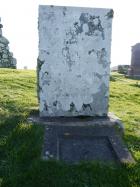
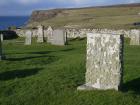
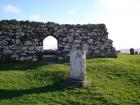
Gravestone of Lady Grange
Submitted by admin on 26 February 2012 - 9:25pm
Revised: 27 March 2012 - 4:56pm — KathKane
Dedicated to:
Inscription:
R.I.P.
RACHEL
WIFE OF
THE HON JAMES ERSKINE
LORD GRANGE
DIED AD 1745
Erected by:
Lord Grange
Material:
Stone
Location:
Trumpan churchyard
Trumpan, IV55 8GW
See map: Google Maps
Images:
Additional information:
The inscription on the gravestone is difficult to read because it is lichen covered. This makes it difficult to identify the gravestone. It lies 4 metres west of the door entrance to the ruined church.
The graveyard lies on an uncategorised road, off the B886, from Stein via Hallin and the Hallistras, North West along the Waternish peninsula.
Lady Grange
Submitted by admin on 26 February 2012 - 9:25pm
Revised: 9 March 2012 - 2:23pm — admin
Title:
Lady
Other names:
Rachel Chiesley (or Chiesly)
Dates:
Born c.1679, died May 1745
Rachel Chiesley was the daughter of Margaret Nicholson, and John Chiesley of Dalry.
In about 1708 James Erskine, Lord Grange (1679–1754), fell in love with her but her father had assassinated Sir George Lockhart, Lord President of the court of session in 1689 and, fearing for his legal career, James Erskine refused to marry her when she became pregnant, until she threatened him with a pistol. According to her, they then lived together for nearly 25 years ‘in great love and peace’. They had four sons and five daughters.
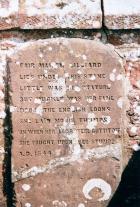
Memorial stone dedicated to Lilias of Ancrum
Submitted by admin on 26 February 2012 - 9:19pm
Revised: 9 March 2012 - 3:30pm — admin
Dedicated to:
Inscription:
FAIR MAIDEN LILLIARD
LIES UNDER THIS STANE
LITTLE WAS HER STATURE
BUT MUCKLE WAS HER FAME
UPON THE ENGLISH LOONS
SHE LAID MONIE THUMPS
AN WHEN HER LEGS WERE CUTTIT OFF
SHE FOUGHT UPON HER STUMPS
A.D.1544
Date:
[Modern]
Material:
Stone
Location:
Lilliard's Edge, near Ancrum
Ancrum
See map: Google Maps
Images:
Additional information:
The memorial stone is on the inside face of the north-east wall of a small, rectangular, brick-walled enclosure
OS Grid coordinates: NT 6196 2749
Lilias of Ancrum
Submitted by admin on 26 February 2012 - 9:19pm
Revised: 9 March 2012 - 2:23pm — admin
Dates:
Allegedly lived around 1554
The only known reference to Lilias is on the memorial stone near the site of the Battle of Ancrum Moor (February, 1545) in the Scottish Borders. As no other sources mention a female warrior, Lilias is probably fictitious. A local myth recalled that while Lilias watched the battle, she saw her lover killed. In anguish she took a sword and fought bravely before dying herself. The Scots won this Border battle.
Cairn marking supposed birthplace of Flora MacDonald
Submitted by admin on 26 February 2012 - 9:11pm
Revised: 9 March 2012 - 3:29pm — admin
Dedicated to:
Inscription:
Clan Donald raised this cairn of remembrance to their kinswoman Flora MacDonald daughter of Ranald, son of Angus of Milton South Uist. She was born in 1722 near this place and spent her early life in the house that stood on this foundation. When pursuit was drawing near to the Prince in the Long Island she greatly aided him by her heroism and endurance to gain shelter in the Isle of Skye.
Erected by:
Clan Donald Society
Location:
Near Milton, South Uist
Milton
See map: Google Maps
Additional information:
The memorial cairn is within the walls of an old building.
According to the RCAHMS, 'The actual house in which Flora MacDonald was born was not located. The ruins in which the cairn is situated are considered by the local population to be those of the house in which Flora MacDonald was born. This was confirmed by the factor of South Uist Estates who considers the inscription on the plaque an error. Around the site are the remains of a few deserted buildings.'
OS Grid coordinates: NF 7410 2691
Flora MacDonald
Submitted by admin on 26 February 2012 - 9:11pm
Revised: 18 October 2018 - 1:21pm — Alison McCall
Dates:
Born 1722, died 4 March 1790
Flora MacDonald was born in Milton, South Uist, the daughter of Marion MacDonald, a minister’s daughter, and Ranald MacDonald of Milton, a tacksman. The family had high social standing and lived in finely furnished homes. Her father died around 1724 and her mother remarried four years later.
Images:
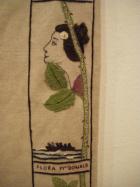
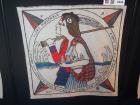
Sculpture of seven white swans in flight, a tribute to Violet Jacob
Submitted by admin on 26 February 2012 - 8:58pm
Revised: 28 March 2012 - 9:56am — Rose
Dedicated to:
Inscription:
Tribute to Violet Jacob
Designed by:
David Annand
Date:
1998
Material:
Bronze
Location:
Roundabout near railway station
Western Road
Montrose
See map: Google Maps
Additional information:
There are three commemorative Montrose sculptures by David A. Annand, put in place in 1998, and situated beside the bypass road. Two depict skeins of pinkfoot geese in aluminium resin, and are called ‘Far Abune the Angus Straths’, echoing a line from Violet Jacob’s poem ‘The Wild Geese’. The main sculpture, showing seven white bronze swans in flight and banking in formation on the station roundabout, is called ‘Tribute to Violet Jacob’ and may draw its inspiration from her story ‘The Fifty-Eight Wild Swans’.
Wood planted in memory of Alice Horsman
Submitted by admin on 26 February 2012 - 8:50pm
Revised: 9 March 2012 - 3:21pm — admin
Dedicated to:
Inscription:
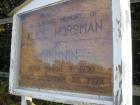
A wooden board beside the wood reads:
PLANTED 198[?]
IN LOVING MEMORY OF
ALICE HORSMAN
OF
DRIMNIN
BORN MARCH 9 1890
DIED DECEMBER 25 1978
Location:
near Drimnin
Drimnin
See map: Google Maps
Images:
Additional information:
The inscribed board is mounted under glass and stands beside a wood on the Drimnin estate.
(In grid square 5555 on OS map sheet 47, 1:50000 series)
Alice Horsman
Submitted by admin on 26 February 2012 - 8:50pm
Revised: 9 March 2012 - 2:22pm — admin
Dates:
Born 9 March 1890, died 25 December 1978
Alice Horsman was a Classics student at Somerville College, Oxford. She matriculated in 1908 and was among the first women to be called to the English Bar. She practiced law for many years until deteriorating hearing forced her to end her career. Her law chambers were destroyed in the Blitz in 1940, and in 1943 she bought the Drimnin estate in Morvern, Argyll and took up farming.
Portrait head of Helen Duncan
Submitted by admin on 26 February 2012 - 8:41pm
Revised: 9 March 2012 - 3:20pm — admin
Dedicated to:
Designed by:
Dronma
Date:
1997
Material:
Bronze
Location:
The Stirling Smith Art Gallery and Museum
Dumbarton Road
Stirling, FK8 2RQ
See map: Google Maps
Additional information:
Currently on loan from Dronma to The Stirling Smith Art Gallery and Museum, Stirling, and displayed in Gallery 111.