Recently added records
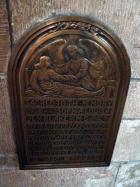
Memorial plaque to Sophia Jex-Blake
Submitted by admin on 4 March 2012 - 9:44pm
Revised: 7 January 2024 - 5:20pm — Alison McCall
Dedicated to:
Inscription:
SACRED TO THE MEMORY OF SOPHIA LOUISA JEX-BLAKE MD
BY WHOSE ENERGY, COURAGE, SELF-SACRIFICE AND PERSEVERANCE THE SCIENCE OF MEDICINE AND THE ART OF HEALING WERE OPENED TO WOMEN IN SCOTLAND
1840–1912
Location:
North aisle, St Giles’ Cathedral
High Street
Edinburgh
See map: Google Maps
Images:
Sophia Louisa Jex-Blake
Submitted by admin on 4 March 2012 - 9:44pm
Revised: 7 January 2024 - 5:17pm — Alison McCall
Title:
Doctor
Dates:
Born 21 January 1840, died 7 January 1912
Sophia Jex-Blake was the daughter of Maria Cubitt, and Thomas Jex-Blake, retired barrister. Described as ‘excessively clever’, she was unhappy with the lack of educational opportunities available to her as a woman.
She studied at Queen’s College, London, from 1858, qualifying as a teacher and giving her services free to organisations providing education to poor women and children. In 1862, she took a temporary post in Mannheim, Germany, but was unhappy there.
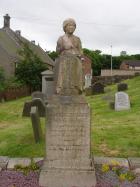
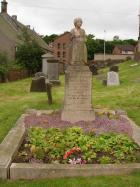
Memorial to Marjory Fleming, with carved stone figure
Submitted by admin on 4 March 2012 - 9:41pm
Revised: 19 November 2014 - 3:00pm — admin
Dedicated to:
Inscription:
MARJORY FLEMING
PET MARJORIE
Died at Kirkcaldy
December 19th 1811
Aged 8 years and 11 months
The Youngest Immortal in The World of Letters
Designed by:
Pilkington Jackson
Date:
1930
Material:
Stone
Location:
Graveyard of Abbotshall Church
Abbotshall Road
Kirkcaldy, KY2 5PH
See map: Google Maps
Images:
Additional information:
The memorial has a statue of Marjory Fleming, seated and reading a book, carved on top of the inscribed stone on the site of her grave.
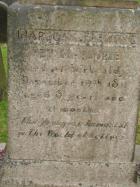
The inscription reads:
MARJORY FLEMING
PET MARJORIE
died at Kirkcaldy
December 19th 1811
aged 8 years and
11 months
The Youngest Immortal
in The World of Letters
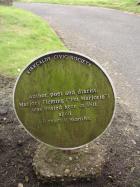
Memorial plaque to Marjory Fleming, Abbotshall Church
Submitted by admin on 4 March 2012 - 9:36pm
Revised: 24 July 2012 - 9:22am — admin
Dedicated to:
Inscription:
Author, poet and diarist, Marjory Fleming (“Pet Marjorie”) was buried here in 1811 aged 8 years 11 months
Erected by:
Kirkcaldy Civic Society
Date:
1991
Material:
Bronze
Location:
Entrance to Abbotshall Church graveyard
Abbotshall Road
Kirkcaldy, KY2 5PB
See map: Google Maps
Images:
Additional information:
Memorial plaque to Jane Haining
Submitted by admin on 4 March 2012 - 9:31pm
Revised: 4 April 2012 - 10:43am — admin
Dedicated to:
Inscription:
1897-1944
TO THE GLORY OF GOD
AND IN REMEMBRANCE OF
JANE HAINING, MISSIONARY, BORN IN
THIS PARISH AND A MEMBER OF CRAIG CHURCH
DIED IN AUSCHWITZ CONCENTRATION CAMP
ON OR ABOUT 17th JULY 1944
Material:
Brass
Location:
West wall inside Dunscore Parish Church
Kirkgate
Dunscore
See map: Google Maps
Memorial stone dedicated to Mary Erskine
Submitted by admin on 4 March 2012 - 9:25pm
Dedicated to:
Inscription:
IN MEMORY OF
MARY ERSKINE
WHO WITH
THE COMPANY OF MERCHANTS OF THE CITY OF EDINBURGH
FOUNDED
THE MERCHANT MAIDEN HOSPITAL
BORN 12 MAY 1629
DIED 2 JULY 1707
Location:
Greyfriars' Kirkyard, Greyfriars' Tolbooth and Highland Kirk
Candlemaker Row
Edinburgh, EH1 2QA
See map: Google Maps
Mary Erskine
Submitted by admin on 4 March 2012 - 9:25pm
Revised: 9 March 2012 - 2:30pm — admin
Other names:
'Arskine'
Dates:
Born 1629, died 2 July 1707
Mary Erskine married Robert Kennedy, a writer, in 1661. He died in 1671 and in 1675 she married James Hair, a druggist (apothecary), who died in 1683. She had one daughter, Euphame.
On the death of her first husband, Mary Erskine became a shopkeeper; on the death of her second, she paid off his debts and became a successful businesswoman. She rented out property and was a moneylender (also described as a private banker) to businessmen, professionals, and to some women, usually widows continuing their husbands’ business or starting their own.
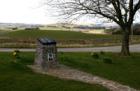
Stone cairn dedicated to Jane Haining
Submitted by admin on 4 March 2012 - 9:22pm
Revised: 27 November 2014 - 3:24pm — Margaret Fergus...
Dedicated to:
Inscription:
This memorial was erected in 2005
By the people of Dunscore
In loving remembrance of
Jane Haining
A HEROIC Christian martyr
Jane Mathison Haining was born at Lochenhead Farm, Dunscore on 6th June 1897.
Her early schooling and the family connections with Dunscore Craig United Free Kirk laid a good foundation for her future life. This eventually led Jane to journey to Hungary and her employment as Matron in the Girls’ Home of the Jewish Mission Station in Budapest.
Jane visited Dunscore for the last time in 1939 and returned to Budapest, against Church of Scotland advice, saying that if the children needed her in days of sunshine, they had much more need of her in days of darkness.
Jane was arrested by the Gestapo in 1944 and taken to Auschwitz, that dreaded prison where almost 4 million men, women and children were exterminated in the gas chambers.
In a letter to a friend she wrote:’Here on the way to Heaven are mountains but further away than ours'. She died on or about 17th July 1944.
Erected by:
The people of Dunscore
Date:
2005
Material:
Stone
Location:
Beside Dunscore Parish Church
Dunscore, DGY
See map: Google Maps
Images:
Stained glass windows dedicated to Jane Haining
Submitted by admin on 4 March 2012 - 9:16pm
Dedicated to:
Inscription:
To the glory of God
and in remembrance of
Jane Haining, Missionary, born in
this parish and a member of Craig Church
Died in Auschwitz concentration camp
On or about 17 th July 1944
Date:
June 1948
Material:
Stained glass
Location:
Queen's Park Church
170 Queen's Drive, Strathbungo
Glasgow, G42 8QZ
See map: Google Maps
Additional information:
The two stained glass windows, entitled 'Service' and 'Sacrifice', are dedicated to Jane Haining, 'A Heroic Christian Martyr'.
Jane Haining
Submitted by admin on 4 March 2012 - 9:16pm
Revised: 4 September 2026 - 11:20am — Alison McCall
Other names:
Jane Mathison Haining
Jane Matheson Haining was born at Lochenhead Farm, Dunscore, Dumfriesshire. After education at Dumfries Academy, she worked as a secretary at J. & P. Coats, Paisley, attending the United Free Church, Queen’s Park West, Pollockshields.
She trained in missionary work, travelled to Hungary and became matron in the Girls’ Home of the Jewish Mission Girls’ Home in Budapest. She visited Dunscore for the last time in 1939 and returned to Budapest, against Church of Scotland advice, saying that if the children needed her in days of sunshine, they had much more need of her in days of darkness.