Recently added records
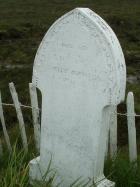
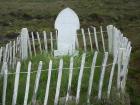
Gravestone of Betty Corrigall
Submitted by jane george on 7 August 2012 - 2:27pm
Revised: 1 September 2012 - 1:12pm — Hetty
Dedicated to:
Inscription:
Here Lies Betty Corrigall
Erected by:
Erected by Mr Harry Berry on behalf of the community
Designed by:
Mr Harry Berry
Date:
1976
Material:
Fibre-glass was used as the peaty ground would not support the weight of stone.
Location:
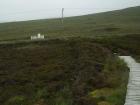
Hoy, Orkney
See map: Google Maps
Images:
Additional information:
Betty Corrigall was a young woman who lived in the parish of North Walls on the island of Hoy in about 1770. Some online sources state that she lived in a cottage called Greengears, which lies between Mill Burn and Rysa Lodge, but according to an old local woman (who grew up at Greengears) Betty actually lived at a small nearby croft called Little Cletts. There is nothing left of this croft now but an old variety of daffodils still flower where the doorway must once have stood.
When she was 27 (some say 17?) Betty was abandoned by her man (some say he was a passing sailor) who left her pregnant and unmarried. She decided to take her own life; her first attempt to drown herself failed but a few days later she hung herself.
As she had committed suicide she was not allowed to be buried on consecrated (church) ground and the local Laird would not allow her to be buried in the parish. It was decided that she would be buried on the boundry between the parishes of North Walls and Hoy, near the Water of Hoy, far from any houses.
She lay there in an unmarked grave until she was discovered by two local men cutting peats in 1933. When her wooden coffin was opened it is said that she lay perfectly preserved inside. After being reported to the Procurator Fiscal Betty was reburied in the same spot.
She was disturbed again in 1941 by soldiers rebuilding the road. Due to the practice of the soldiers repeatedly coming to look at her remains she was moved 50 metres and her coffin was placed under a slab of concrete.
In 1949 an American minister, Kenwood Bryant, erected a wooden cross and small wooden fence. He asked local Customs and Excise Officer Harry Berry to erect a more fitting gravestone but it was to be some years before this was done.
Finally one evening in 1967 the present gravestone was erected and a quiet burial service was said for her.
Sources: http://www.orkneyjar.com/history/historicalfigures/bettycorrigall/index....
and local knowledge as I grew up not far from Betty's croft at Little Cletts.
Betty Corrigall
Submitted by jane george on 7 August 2012 - 2:27pm
Revised: 29 October 2012 - 5:34pm — Rose
Dates:
fl. 1700s
Betty Corrigall lived in Greengairs Cottage near Rysa in the Orkney island of Hoy. Her boyfriend was away whaling when, aged 27, she discovered she was pregnant and in her shame she tried to commit suicide by drowning in the sea, but was seen and stopped. She later hanged herself in a barn.
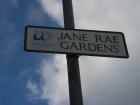
Jane Rae Gardens
Submitted by Morag Smith on 7 August 2012 - 2:11pm
Revised: 29 August 2012 - 1:02pm — Morag Smith
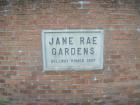
Jane Rae
Submitted by Morag Smith on 7 August 2012 - 2:11pm
Revised: 27 August 2012 - 3:07pm — admin
Political activist and suffragette Jane Rae was born in Bonnybridge in 1872, but came to live in Clydebank with her family. She was a strikingly tall woman, strong-willed and studious.
She worked in the Singer Factory's 'Needle Flat' in Clydebank, and was actively involved in the strike of 1911 - for which she was sacked. She joined the Independent Labour Party after hearing Keir Hardie, and became the Clydebank Branch Secretary in 1913.
Images:
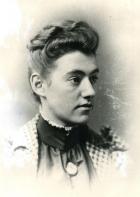
Margaret Humphrey
Submitted by Rose on 6 August 2012 - 5:00pm
Revised: 7 August 2012 - 8:43am — admin
Other names:
Margaret Allen
Dates:
Baptised 16 February 1773
Margaret Allen was the daughter of William Allan and Margaret Wilson. She married George Humphrey on 9 June 1791, and according to the 1821 Census return, George was a teacher. The couple had 13 children between 1792 and 1815.
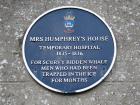
Plaque on 'Mrs Humphrey's House'
Submitted by Rose on 6 August 2012 - 4:47pm
Revised: 7 August 2012 - 8:56am — admin
Dedicated to:
Inscription:
MRS HUMPHREY’S HOUSE
TEMPORARY HOSPITAL
1835-1836
FOR SCURVY RIDDEN WHALE
MEN WHO HAD BEEN
TRAPPED IN THE ICE
FOR MONTHS
Location:
On the side of a building in Stromness
Back Road
Stromness
See map: Google Maps
Images:
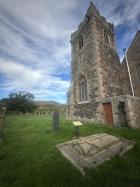
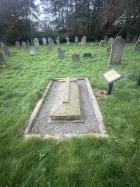
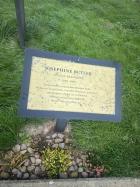
Grave and plaque to Josephine Butler
Submitted by Rose on 3 August 2012 - 4:46pm
Revised: 19 October 2025 - 1:56pm — Alison McCall
Dedicated to:
Inscription:
Josephine Butler
Social Reformer
1828-1906
To the Memory of Josephine Elizabeth Butler
Widow of George Butler, Canon of Winchester Cathedral
and daughter of John Grey of Milfield
She died on December 30th 1906
In the 79th year of her age.
Material:
Stone
Location:
Graveyard, St Gregory the Great churchyard
Kirknewton, NBL
See map: Google Maps
Images:
Josephine Butler
Submitted by Rose on 3 August 2012 - 4:21pm
Revised: 31 October 2012 - 1:07pm — admin
Other names:
Josephine Elizabeth Grey
Dates:
Born 13 April 1825, died 30 December 1906
Josephine Elizabeth Grey was born on 13 April 1828 in Milfield, Northumberland, to John Grey (a cousin of Earl Grey) and his wife Hannah Annett. Educated at home, she was strongly influenced by her father’s passion for social reform and hatred of injustice. She married George Butler, then a tutor at Oxford, in 1852 with whom she shared many concerns, including the need for the abolition of slavery, and better rights for marginalised women.
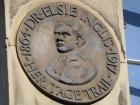
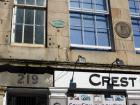
Heritage Trail Plaque to Elsie Inglis
Submitted by Margaret Fergus... on 31 July 2012 - 9:01pm
Revised: 24 March 2025 - 3:42pm — Alison McCall
Dedicated to:
Inscription:
DR ELSIE INGLIS
1864- 1917
HERITAGE TRAIL
Location:
on the wall up at 1st floor window level
219 High Street, Royal Mile
Edinburgh, RH1 1PE
See map: Google Maps
Images:
Additional information:
"In 1904 she set up a small maternity hospital for Edinburgh's poor in the city's High Street, staffed entirely by women. This later became the Elsie Maude Inglis Memorial Hospital." (Undiscovered Scotland www.undiscoveredscotland.co.uk/usbiography/i/elsieinglis....)
The street numbering is likely to have changed.
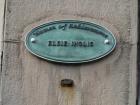
Women of Achievement Plaque to Elsie Inglis
Submitted by Margaret Fergus... on 31 July 2012 - 8:46pm
Revised: 22 March 2025 - 1:35pm — Alison McCall
Dedicated to:
Inscription:
Women of Achievement
ELSIE INGLIS
Location:
on the wall near the level of the 1st floor windows
219 High Street, Royal Mile
Edinburgh, EH1 1PE
See map: Google Maps
Images:
Additional information:
Part of the Edinburgh Women's Achievement Trail