Recently added records
Elizabeth Edington
Submitted by Margaret Fergus... on 5 December 2012 - 4:49pm
Revised: 10 December 2012 - 12:01pm — admin
Dates:
1831 - 4th November, 1908
Elizabeth was born in 1831. With her brother Francis Edington (1819-1901), she owned the Commercial Hotel ( now the County Hotel) at 15-17 High Street, North Berwick, East Lothian. Their parents were Alexander Edington, a slater, and Margaret Burnet.
Francis was Treasurer of the Royal Burgh of North Berwick Town Council and founder member of Bass Rock Golf Club. He died 24th August 1901 at their home at Ethandune, 7 Dirleton Avenue, North Berwick.
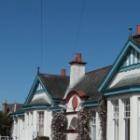
Edington Cottage Hospital, North Berwick
Submitted by Margaret Fergus... on 5 December 2012 - 4:49pm
Revised: 10 December 2012 - 12:03pm — admin
Dedicated to:
Erected by:
Bequeathed by Miss Elizabeth Edington
Date:
June 1912
Location:
Edington Cottage Hospital
54 St Baldred's Road
North Berwick, EH39 4PU
See map: Google Maps
Images:
Additional information:
Originally opened as Edington Home; a respite home, particularly for mothers taking time out from looking after their children. It became known around the town as 'The Home of Tired Mothers'. It now provides respite, palliative and terminal care, as well as a minor injuries unit.
Category B Listed Building Category, 26 May 1988
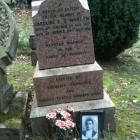
Memorial for Caroline Martyn
Submitted by Morag Allan Campbell on 30 November 2012 - 7:13pm
Revised: 1 December 2012 - 1:45pm — Morag Allan Campbell
Dedicated to:
Inscription:
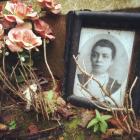
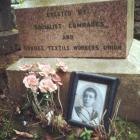
A token of esteem to the memory of Caroline E D Martyn, born at Lincoln 3rd May 1867, died at Dundee 23rd July 1896. A devoted worker in the cause of humanity. Erected by Socialist comrades and Dundee Textile Workers Union.
Erected by:
Dundee Textile Workers Union
Date:
1896
Material:
Granite
Location:
Balgay Cemetery
Dundee, DD2 2UB
See map: Google Maps
Images:
Additional information:
Shocked and saddened by the death of their comrade, the Dundee branch of the Independent Labour Party and the Dundee Textile Workers’ Union collected subscriptions for a memorial to be placed at her grave. By 2010, the memorial had fallen into disrepair but, at the instigation of Dundee Trades Council, the grave was tidied and the granite column restored. A service of commemoration was held at the graveside, followed by a civic reception in the City Chambers. Among the guests was Caroline's great niece.
Caroline Martyn
Submitted by Morag Allan Campbell on 30 November 2012 - 7:13pm
Revised: 4 December 2012 - 1:01pm — admin
Other names:
Carrie
Dates:
3/5/1867 - 23/7/1896
Caroline Eliza Derecourt Martyn, also known as Carrie, was born in Lincoln in 1867, the eldest child of devout Anglican parents. After staying with an aunt who held decidedly left wing views, Caroline became a radical, then a socialist, though strong religious principles inherited from her parents caused her to disagree with the Marxist principles of many of her contemporaries. In 1892, Caroline gave up her job as governess at the Royal Orphanage asylum at Wandsworth and devoted herself full time to the socialist cause.
Janet Courtney
Submitted by Margaret Fergus... on 28 November 2012 - 7:04pm
Revised: 29 December 2023 - 6:36pm — Alison McCall
Other names:
Her maiden name was Hogarth.
Dates:
27 November 1865 - 24 September 1954
Mrs Janet Courtney was a senior member of the Carnegie Trust, which funded the building of the hostel in Lerwick.
She studied Philosophy at Oxford. She was the first woman to occupy a post in the Bank of England, in 1894, when she was appointed to organise a staff of female clerks. She was part of the editorial staff of the Encyclopædia Britannica 1906-1914 and 1920-22. During the First World War she worked in staff welfare for the Ministry of Munitions, and was awarded an OBS in 1917.
She was one of the first female magistrates.
Janet Courtney Hostel
Submitted by Margaret Fergus... on 28 November 2012 - 7:04pm
Revised: 4 December 2012 - 1:11pm — admin
Dedicated to:
Location:
Janet Courtney Hostel
Lovers Loan
Lerwick, ZE1 0BA
See map: Google Maps
Images:
Additional information:
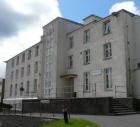
Halls of Residence on the Shetland Mainland for students, from other Shetland Islands, attending Anderson High School.
Maggie Dickson
Submitted by Margaret Fergus... on 22 November 2012 - 11:14pm
Revised: 3 July 2013 - 5:51am — Margaret Fergus...
Other names:
Half-hangit Maggie, Margaret Dickson
Dates:
early to mid 18th Century
In 1723 Margaret Dickson, a fish hawker in Edinburgh, left town to visit relatives after being deserted by her husband.
On the way south she stopped off n Kelso at an Inn to break the journey. She stayed a while and worked in return for her board and lodgings. While she was there, Maggie formed a relationship wth the landlady's son and fell pregnant with his child.
Maggie Dickson's Pub
Submitted by Margaret Fergus... on 22 November 2012 - 11:14pm
Revised: 24 November 2012 - 9:21pm — admin
Dedicated to:
Inscription:
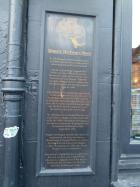
Wall Board:
Maggie Dickson's Story
In 1723 Margaret Dickson, a fish hawker in Edinburgh, left town to visit relatives after being deserted by her husband.
On the way south she stopped off n Kelso at an Inn to break the journey. She stayed a while and worked in return for her board and lodgings. While she was there, Maggie formed a relationship wth the landlady's son and fell pregnant with his child.
This was not n her contract of employment so she concealed the fact that she was expectng and in tme the child was born prematurely. When the baby died a few days later, she was determined to throw the body into the River Tweed. Losing her nerve, she laid the baby at the water's edge.
The body was discoverd later that day and traced back to Maggie. Arrested and tried under the 1690 Concealment of Pregnancy Act, she was sentenced to be hanged n the Grassmarket Ednburgh on 2nd September 1724.
Maggie was hanged and after her death was pronounced, the body was taken to Musselburgh for burial. On the way there, the funeral heard noises from Maggie's coffin, On opening the coffin they found Maggie to be very much alive.
Recovering to full health, she was allowed to live as it was seen to be God's will that she survive. Living the rest of her days in Edinburgh she was known by all as the celebrated 'Half-Hangit Maggie'
Location:
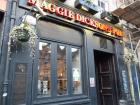
Maggie Dickson's Pub
92 Grassmarket
Edinburgh, EH1 2JR
See map: Google Maps
Images:
Mary Gray Garden
Submitted by Alison McCall on 21 November 2012 - 10:04am
Revised: 22 November 2012 - 12:38pm — admin
Other names:
Her maiden name was Hogg
Dates:
21 August 1831 - 13 June 1911
Mary Gray Hogg or Garden was the youngest daughter of writer and poet James Hogg "the Ettrick Shepherd" and Margaret Phillips. She married William Garden in 1866. She preserved many of her father's literary possessions, including original manuscripts and correspondence. She wrote a biography of her father, the third edition of which was published in 1893. She also wrote a biography of her mother, Margaret Phillips.
Gravestone of Mary Gray Garden
Submitted by Alison McCall on 21 November 2012 - 10:04am
Revised: 21 November 2012 - 10:17am — Alison McCall
Dedicated to:
Inscription:
...Also of Mary Gray Garden, widow of William Garden and youngest daughter of the Ettrick Shepherd.
Born 21st August 1831
Died 13th June 1911
Material:
Stone
Location:
St Nicholas graveyard
Union Street
Aberdeen , AB10 1JZ
See map: Google Maps
Images: